
Southern Sydney’s Home of Porcelain Veneers
What Are Porcelain Veneers?
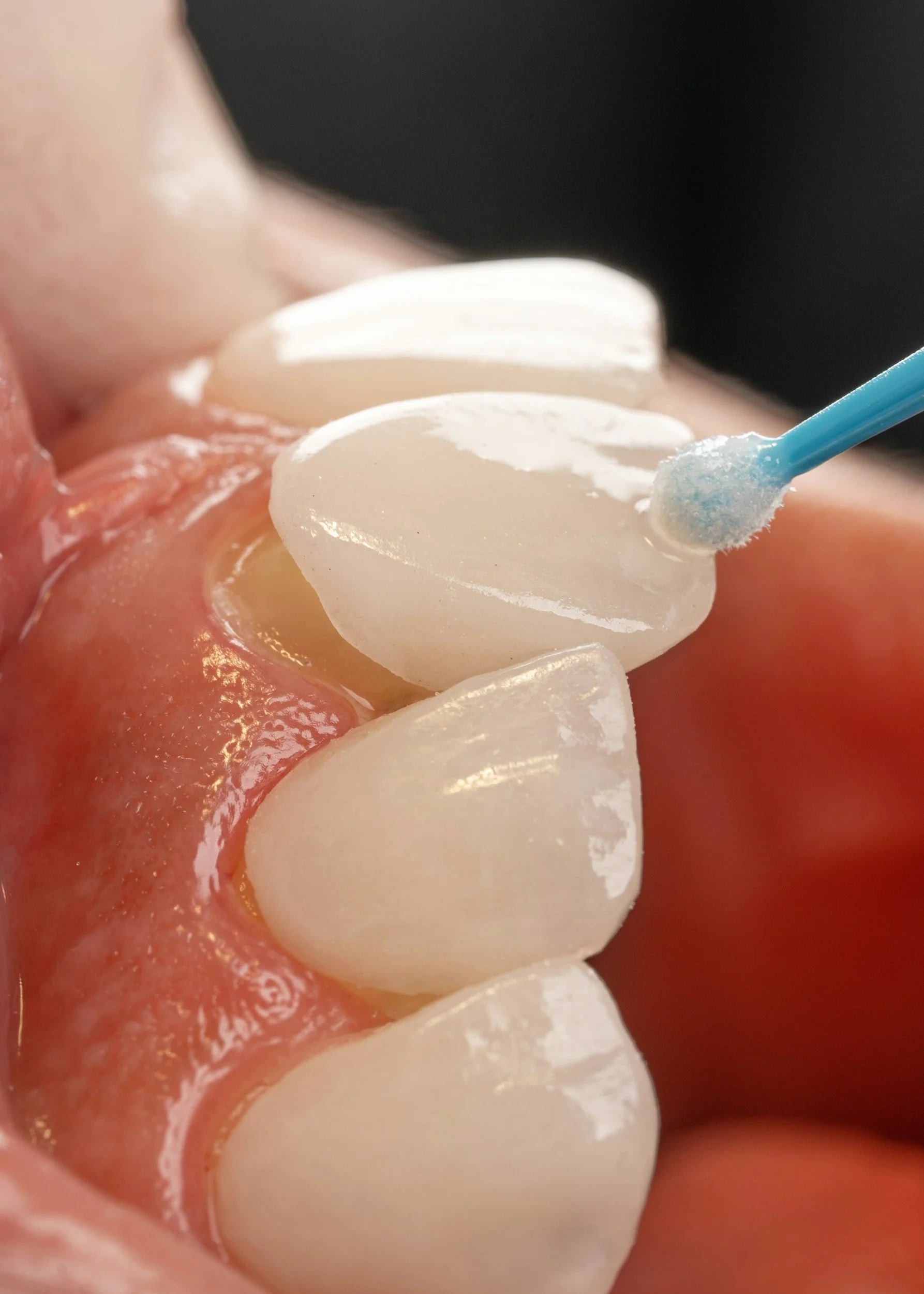
Porcelain veneers are ultra-thin, custom-crafted ceramic shells bonded to the front surface of teeth to enhance their shape, colour, symmetry, and overall appearance. They are a cornerstone of modern aesthetic dentistry and are commonly used in comprehensive smile design.
Constructed from high-strength dental ceramics—often lithium disilicate systems such as Ivoclar IPS e.max—porcelain veneers are engineered to mimic the optical properties of natural enamel. This allows them to reflect and refract light in a way that produces lifelike translucency and depth.
What Concerns Do Veneers Address?
Porcelain veneers are highly versatile and can correct:
Discoloured or heavily stained teeth
Worn, chipped, or fractured enamel
Minor misalignment or uneven spacing
Irregular tooth shape or size
Gaps between teeth (diastemas)
Mild crowding when orthodontics is not indicated
They are particularly popular in smile makeover cases where harmony,
proportion, and facial aesthetics are carefully considered.
How Do Porcelain Veneers Work?
The process typically involves:
1. Assessment & Smile Design
Digital imaging, photography, and facial analysis are used to plan ideal proportions and tooth morphology.
2. Nil or Conservative Tooth Preparation
A minimal amount of enamel (often 0.3–0.7 mm) is gently reshaped to allow space for the veneer while preserving maximum natural tooth structure. In some cases, no preparation is required whatsoever!
3. Custom Fabrication
Veneers are fabricated in a dental laboratory with precise layering techniques to achieve natural translucency and shade blending.
4. Adhesive Bonding
The veneers are permanently bonded using advanced adhesive protocols. When bonded predominantly to enamel, porcelain veneers demonstrate excellent long-term success rates.
What Makes Our Porcelain Veneers So Aesthetic?
Porcelain has unique advantages:
High resistance to staining
Excellent colour stability
Enamel-like translucency
Superior durability compared to composite bonding
Unlike composite resin, porcelain maintains its gloss and shade integrity for many years, making it ideal for patients seeking a long-lasting cosmetic enhancement.
Are Porcelain Veneers Permanent?
Because a small amount of enamel is usually removed during preparation, porcelain veneers are considered an irreversible treatment. However, they are conservative compared to full crowns and preserve most of the natural tooth structure.
With proper care and maintenance, porcelain veneers commonly last 10–15 years or longer.
Who Is an Ideal Candidate?
Porcelain veneers are best suited for patients who:
Have healthy teeth and gums
Maintain good oral hygiene
Do not have uncontrolled bruxism
Desire aesthetic improvement rather than major structural reconstruction
A personalised consultation is essential to determine whether veneers—or alternatives such as orthodontics or composite bonding—are most appropriate.
In essence, porcelain veneers combine art and science: precise dental engineering with cosmetic design principles to create a refined, natural-looking smile.
Porcelain Veneers FAQ
-
Porcelain veneers are a long-term cosmetic dental solution. On average, they last 10 to 15 years, and in many cases 20 years or more with proper care and expert placement.
High-quality ceramics such as lithium disilicate (for example, Ivoclar IPS e.max) are extremely durable and resistant to staining and wear, making them ideal for long-lasting smile enhancements.
-
Several factors influence how long veneers will last:
1. The Quality of Materials Used
Premium porcelain materials are stronger, more aesthetic, and more resistant to chipping.
2. The Skill of the Dentist
Precise preparation, bonding techniques, and careful smile design significantly impact longevity.
3. Your Bite and Habits
Patients who grind or clench their teeth (bruxism) may require a custom nightguard to protect their veneers from excessive force.
4. Oral Hygiene
Good brushing, flossing, and regular dental check-ups help prevent gum recession and decay around veneers.
5. Lifestyle Choices
Avoid biting hard objects (ice, pens, fingernails) and limit habits that place unnecessary stress on your teeth.
-
Yes — veneers are durable, but they are not permanent. Over time, they may need replacement due to:
Natural wear
Minor chipping
Gum changes
A desire to refresh your smile
When properly maintained, porcelain veneers provide a predictable, long-lasting aesthetic result.
-
Porcelain veneers are highly effective for cosmetic enhancement, but like any dental treatment, they have limitations. Understanding these helps patients make an informed decision.
1. They Are Irreversible
Veneers typically require removal of a thin layer of enamel (around 0.3–0.7 mm). Because enamel does not regenerate, the procedure is considered permanent. Once prepared, the tooth will always require some form of restoration.
2. Cost
Porcelain veneers are a premium treatment due to:
Custom laboratory fabrication
High-strength ceramic materials (such as lithium disilicate systems from manufacturers like Ivoclar)
Advanced adhesive bonding protocols
Significant clinical time and aesthetic planning
They are more expensive than composite bonding or whitening.
3. Potential for Fracture or Chipping
Although porcelain is strong, it is not indestructible. Excessive biting forces, trauma, or untreated bruxism can cause:
Edge chipping
Ceramic fracture
Debonding
Patients who grind their teeth often require a nightguard.
4. Not Ideal for Significant Misalignment
Veneers can correct mild alignment concerns visually, but they do not physically move teeth. In cases of moderate to severe crowding or bite issues, orthodontics may be a more conservative and biologically sound first step.
5. Sensitivity (Short-Term)
Some patients experience temporary tooth sensitivity after preparation and bonding. This usually resolves as the teeth settle.
6. Future Replacement
Veneers are long-lasting but not lifetime restorations. Over time, they may require replacement due to:
Natural wear
Gum recession
Marginal staining
Aesthetic updates
7. Case Selection Is Critical
Veneers are not appropriate when there is:
Active gum disease
Extensive decay
Insufficient enamel for bonding
Uncontrolled parafunctional habits
Proper diagnosis and planning are essential to long-term success.
The Bottom Line
Porcelain veneers are an excellent cosmetic solution when correctly indicated and expertly executed. However, they are a commitment—financially and biologically—and should be approached with careful evaluation and clear expectations.
-
A common concern is what happens to the natural teeth once veneers are placed. When properly planned and bonded, the underlying teeth remain healthy and functional. However, there are important biological and mechanical considerations.
1. A Small Amount of Enamel Is Removed
Before veneers are placed, a thin layer of enamel (typically 0.3–0.7 mm) is reshaped to create space for the ceramic. This allows the veneer to sit naturally without appearing bulky.
Importantly:
Preparation is usually confined to enamel
Enamel bonding provides the strongest and most predictable adhesion
Because enamel does not regenerate, the procedure is irreversible.
2. The Tooth Is Sealed and Protected
Once bonded, porcelain veneers act as a protective outer layer. Modern ceramics—such as lithium disilicate systems from manufacturers like Ivoclar—are bonded using advanced adhesive protocols that create a strong seal between the veneer and tooth.
When bonded primarily to enamel:
The interface is highly durable
Bacterial leakage risk is low
The underlying tooth structure is reinforced
In many cases, the bonded veneer–tooth complex is mechanically stronger than the prepared tooth alone.
3. The Tooth Remains Vital (In Most Cases)
For appropriately selected cases:
The pulp (nerve) remains alive
Blood supply and sensation are maintained
Normal function continues
Temporary sensitivity may occur after preparation but usually resolves.
4. Decay Is Still Possible
Teeth under veneers can still develop decay if:
Oral hygiene is poor
Margins are not properly maintained
Gum recession exposes vulnerable areas
Veneers do not make teeth immune to cavities. Good brushing, flossing, and regular professional maintenance are essential.
5. Long-Term Changes
Over time, natural biological changes may occur:
Gum recession exposing veneer margins
Minor marginal staining
Wear at the bonding interface
If this happens, veneers may need maintenance or replacement.
The Clinical Reality
When veneers are carefully planned, conservatively prepared, and bonded to healthy enamel, the underlying teeth remain stable and healthy for many years. Problems typically arise not from the veneer itself, but from poor case selection, inadequate bonding technique, or lack of maintenance.
A comprehensive assessment ensures that veneers enhance aesthetics without compromising long-term dental health.
-
Veneers are safe and biocompatible. Porcelain materials are well tolerated by the body. Risks are minimal when oral health is stable and treatment is carefully planned.
-
When minimally invasive or no preparation techniques are used, veneers preserve most if not all remaining natural tooth structure. They should not damage healthy teeth when designed properly and placed appropriately.
-
No. Veneers cover the front surface of a tooth. Crowns encase the entire tooth and require more reduction. Veneers are typically more conservative.
-
They can visually correct mild misalignment but do not physically move teeth like braces or aligners.